Menu

Menu
IXCHIQ® DEMONSTRATED A GENERALLY WELL-TOLERATED SAFETY PROFILE
- In adults 18 years of age and older, the safety and tolerability profile of IXCHIQ® was evaluated in baseline seronegative adults in the study VLA1553-301.1*
- In adolescents aged 12 to 17 years, the safety and tolerability profile of IXCHIQ® was evaluated in a randomized, double-blind, placebo-controlled phase 3 trial.1†
THE FOLLOWING ARE THE MOST COMMON SOLICITED SYSTEMIC AND INJECTION SITE ADVERSE REACTIONS WITHIN 10 DAYS REPORTED IN ADULT AND ADOLESCENT SAFETY POPULATIONS.
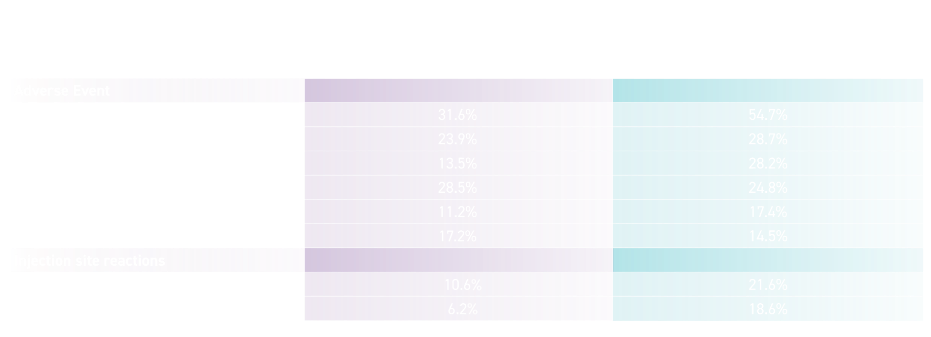
Adapted from the IXCHIQ® Product Monograph.1
- The majority of solicited systemic adverse reactions were of mild to moderate intensity (>95% in adults; >94% in baseline seronegative adolescents).
- In adults, the median day of onset was Day 2 after vaccination for local injection site adverse reactions and Day 5 after vaccination for systemic adverse reactions.
- Solicited systemic and local adverse reactions resolved with a median duration of 2 days in adults and 1 to 2 days in baseline seronegative adolescents.
* Studies (VLA1553-301, VLA1553-302, and VLA1553-101) all conducted in North America in healthy adult participants 18 years of age and older. Study VLA1553-101 was done using an earlier formulation and was a supportive dose-escalation Phase I trial of IXCHIQ® in 120 participants. Study VLA1553-301 was the pivotal double-blind placebo-controlled Phase III trial in 4,115 participants who received IXCHIQ® or placebo (phosphate buffered saline) as a single dose. Study VLA1553-302 was a supportive non-placebo-controlled Phase III trial investigating the consistency of three lots of IXCHIQ® given as a single dose in 408 participants.
† Study VLA1553-321 enrolled 754 participants who received either a single intramuscular dose (1×10⁴ TCID50) of IXCHIQ® (n=502) or placebo (PBS; n=252), with a follow-up period of 6 months. 18.4% of participants had pre-existing antibodies against CHIKV, while 81.4% were CHIKV-naïve. Randomization was stratified by CHIKV baseline serostatus.

FREQUENCY OF CHIKUNGUNYA-LIKE ADVERSE REACTIONS
Participants were monitored for a cluster of symptoms consistent with typical symptoms of wild-type chikungunya infection (chikungunya-like adverse reactions), defined as:
- fever (≥38 °C in Study VLA1553-301 or ≥37.8 °C in Study VLA1553-321) and one or more of any of the following:
- arthralgia or arthritis, myalgia, headache, back pain (only in Study VLA1553-301), rash or certain skin symptoms, lymphadenopathy (only in Study VLA1553-301), or certain neurological, cardiac (only in Study VLA1553-301) or ocular symptoms that occurred with an onset within 30 days after vaccination, regardless of whether they occurred simultaneously or not.
- Severe chikungunya-like adverse reactions included symptoms that prevented daily activity and/or required medical intervention.
| VLA1553-301 Adult participants (≥18 years) |
VLA1553-321 Adolescent participants (12 to 17 years; baseline seronegative) |
| 11.7% in the IXCHIQ® group (n= 3082) reported chikungunya-like adverse reactions, including 1.6% who reported severe chikungunya-like adverse reactions. 0.6% participants in the placebo group (n=1033) reported chikungunya-like adverse reactions, none of which was severe. The median onset of chikungunya-like adverse reactions in IXCHIQ® recipients was 3 days (range 0 to 10 days) after vaccination. The median duration of chikungunya-like reactions in IXCHIQ® recipients was 4 days (range 1 day to at least 6 months). |
27.0% in the IXCHIQ® group (n=408) reported chikungunya-like adverse reactions, including 4.2% who reported severe chikungunya-like adverse reactions. 3.9% baseline seronegative participants in the placebo group (n=206) reported chikungunya-like adverse reactions, none of which was severe. |
Adapted from the IXCHIQ® Product Monograph.1
Adults – prolonged chikungunya-like adverse reactions
22 IXCHIQ® recipients had prolonged chikungunya-like adverse reactions lasting longer than 14 days (median duration 33 days, range 15 days to at least 6 months).
15 IXCHIQ® recipients had chikungunya-like adverse reactions lasting longer than 28 days (median duration 94 days, range 29 days to at least 6 months).
Baseline seronegative adolescents – prolonged chikungunya-like adverse reactions
15 IXCHIQ® recipients and 3 placebo recipients had prolonged chikungunya-like adverse reactions lasting longer than 14 days (median duration 23 days, range 16 to 30 days).
SERIOUS ADVERSE EVENTS
Adults
- The proportions of participants who reported at least one serious adverse event within 6 months following administration was 1.5% (46/3082) in the IXCHIQ® group and 0.8% (8/1033) in the placebo group. Overall, there were two serious adverse events (2/3082 [0.1%]) requiring hospitalization that were considered to be related to IXCHIQ®: 1 event of myalgia, and 1 event of hypovolemic hyponatremia and atrial fibrillation, both events showed full recovery. There were no serious adverse events reported in the placebo group.
Chikungunya virus baseline seronegative adolescents
- The proportions of baseline seronegative participants who reported at least one serious adverse event within 6 months following administration was 1.2% (5/408) in the IXCHIQ® arm and 1.0% (2/206) in the placebo arm.
DEATHS AND ADVERSE EVENTS LEADING TO WITHDRAWAL FROM STUDY
- Three participants died during Study VLA1553-301 due to events independent of study procedures (coronary artery disease, COVID-19, and anoxic brain injury). None of the deaths was considered as related to IXCHIQ®. Approximately 0.1% of participants who received IXCHIQ® vs. 0.2% in the placebo group discontinued their trial participation due to adverse events.
- No participants died during the adolescent study VLA1553-321 up to 6 months post vaccination.
POST-MARKETING DATA
- During post-marketing use, serious adverse reactions following vaccination with IXCHIQ® were most commonly reported in medically frail individuals with advanced chronic diseases, individuals at older age (i.e., ≥65 years of age, especially ≥75 years of age), and those with a high risk of having an undiagnosed immunocompromised condition (e.g., occult cancer or immunosenescence).
- Severe reactogenicity or chikungunya-like adverse reactions in medically frail individuals with chronic diseases may lead to deterioration of general condition including malaise and decreased appetite, exacerbation of preexisting diseases, confusional state, encephalopathy, or encephalitis, leading to falls, hospitalisation and death.
- During post-marketing, additional cases of prolonged chikungunya-like arthralgia occurred after vaccination with IXCHIQ® with a range of duration from a few weeks to >5 months, with a few cases requiring follow-up with rheumatology.
- Encephalitis and encephalopathy (including fatal outcomes) have been reported in individuals ≥74 years of age with multiple comorbidities.
- During the vaccine campaign to address an outbreak in Réunion Island early in 2025, three deaths occurred within two weeks post-vaccination among frail elderly men with multiple comorbidities (advanced neurological disorders and respiratory illness, pneumonia), due to medical decompensation (88 and 77 years of age) or confirmed encephalitis (84 years of age); one death was assessed as probably related to IXCHIQ® vaccination by the local health authority. No deaths were reported in individuals vaccinated for the purpose of international travel.
Vaccinees should be instructed to promptly seek medical attention if they experience any of the above symptoms, suggestive of severe reactogenicity or severe chikungunya-like adverse reactions, prolonged arthralgia, or neurological disorder after vaccination.
POST-MARKET ADVERSE REACTIONS REPORTED WITHIN 30 DAYS OF RECEIVING IXCHIQ®
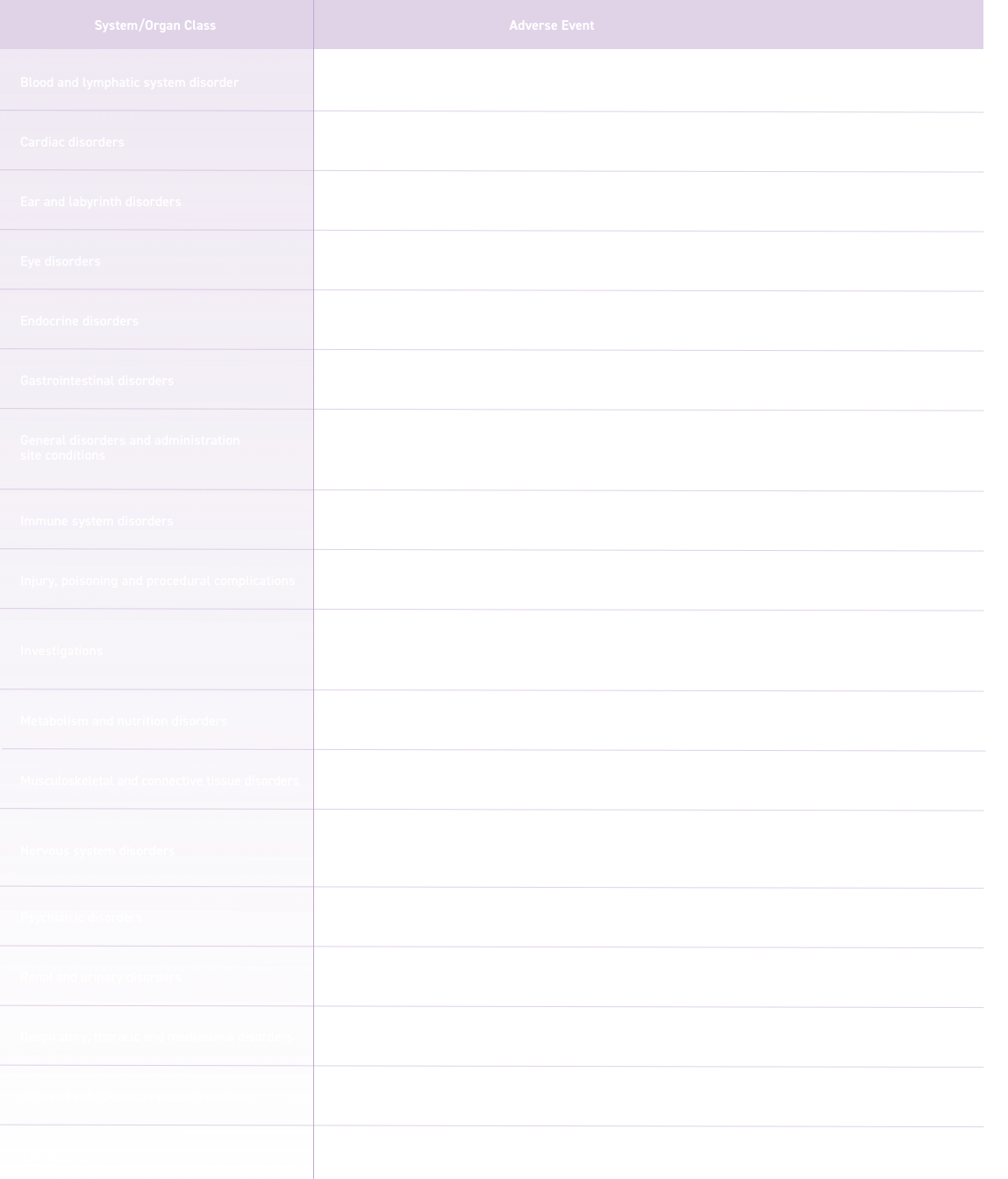
For more information on clinical trial adverse reactions, please refer to the IXCHIQ® Product Monograph.
* Safety data collected in 4,115 participants from the main VLA1553-301 clinical trial, randomized 3:1 to receive IXCHIQ® or PBS (placebo). A total of 3,082 healthy adults 18 through 88 years of age received a single intramuscular dose (1×10⁴ TCID50) of IXCHIQ® and 1,033 received placebo. Participants were followed-up for safety for 6 months post-vaccination.
† Study VLA1553-321 enrolled 754 participants who received either a single intramuscular dose (1×10⁴ TCID50) of IXCHIQ® (n=502) or placebo (PBS; n=252), with a follow-up period of 6 months. 18.4% of participants had pre-existing antibodies against CHIKV, while 81.4% were CHIKV-naïve. Randomization was stratified by CHIKV baseline serostatus.